Post 9/10 — reflections on scientific writing, clarity, and communication
During the early stages of training as a researcher, one often learns to favour the passive voice in scientific writing. It tends to sound more formal, and therefore more “scientific”.
As a result, sentences such as “The model is analysed next” are common.
Over time, however, I began to question whether this always serves the goal of clarity.
If writing is viewed as a dialogue between the reader and the writer, the active voice often feels more direct and easier to follow. For example, “We analyse the model next” feels much more like a conversation.
At first, this led me to favour the active voice more consistently. However, I later realised that the situation is more nuanced.
A useful way to think about whether to use the active or passive voice in a sentence is through the principle of “light before heavy”.
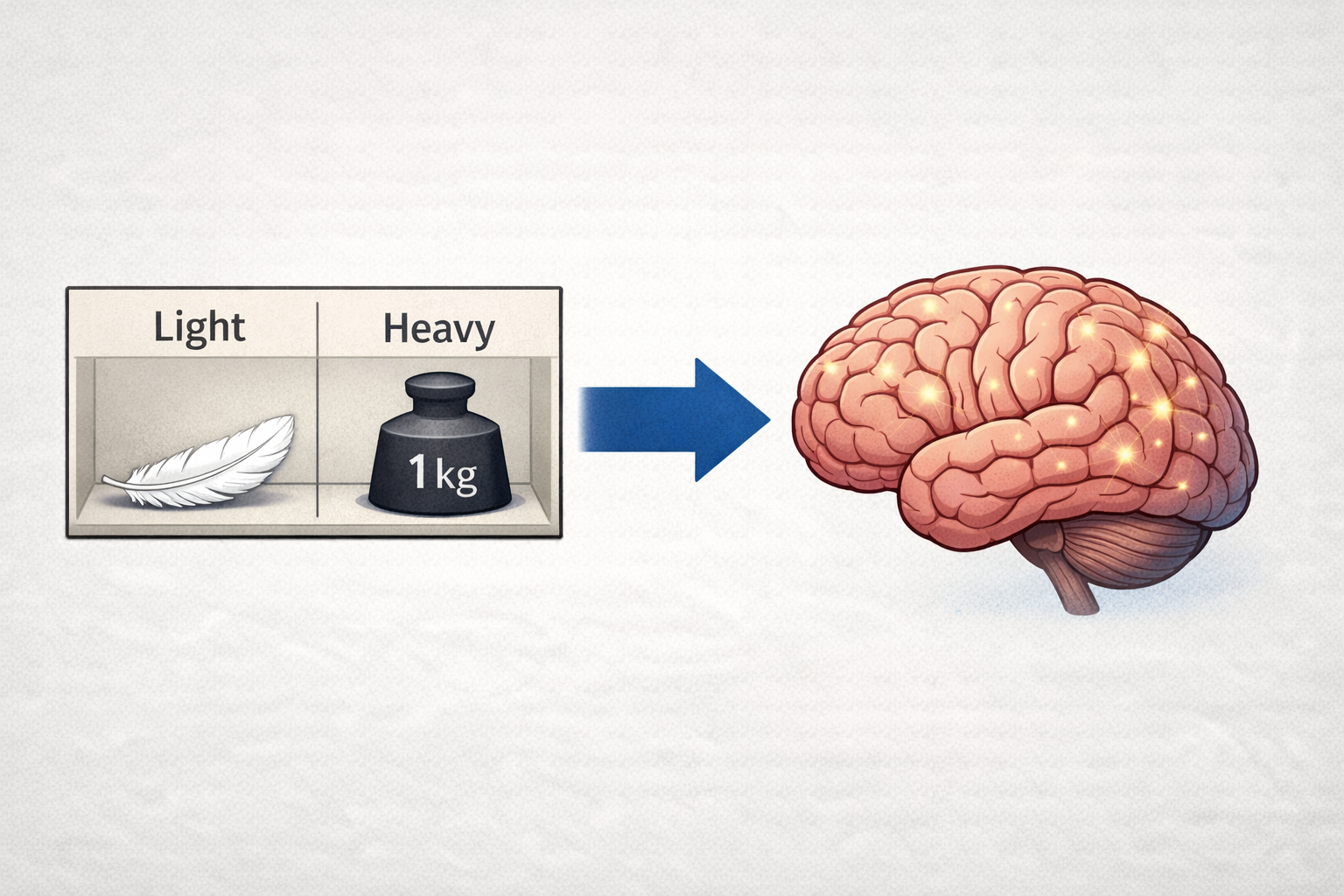
From a cognitive perspective, new information is often easier to process when simpler elements appear earlier in a sentence, and more complex elements appear later. In other words, it is helpful to place the “heavier” part of the sentence towards the end.
This provides a guideline for choosing between active and passive voice.
If the subject (the doer) is relatively simple and the object (what is acted upon) is more complex, the active voice often leads to a clearer sentence. Conversely, if the subject is complex and the object is simpler, the passive voice can result in a more natural flow.
For example, consider the sentence:
“The Guerrilla Army of the Free Galician People took the power by force.”
In this case, the long and complex subject appears early in the sentence, which can make it harder to process.
Rewriting the sentence in the passive voice:
“The power was forcibly taken by the Guerrilla Army of the Free Galician People.”
moves the more complex element towards the end, making the sentence easier to follow.
In the previous post, we saw how active and passive voice can be combined to create flow between sentences using what was described as the “accordion principle”.
Together with the “light before heavy” principle, this suggests that both voices are useful tools. The goal is not to avoid one or the other, but to choose the voice that presents the information most clearly.
As with the other reflections in this series, this is not a strict rule, but a way of thinking about sentence construction that I have found helpful in my own writing.
PS: The image was generated using AI.
 Johannes G. Borgqvist, PhD
Leave a comment