Post 6/10 — reflections on scientific writing, clarity, and communication
In discussions about writing, the term “flow” is often used. We might say that a text “flows well” or that it feels “disjointed”. However, it is not always clear what this actually means.
One way I have found helpful to think about flow is through the concept of arcs of coherence, a term used by Steven Pinker.
In this perspective, a text can be viewed as a collection of interconnected arcs. Each arc has a beginning, a middle, and an end.
An entire article can be seen as one large arc. Within it, each section forms a smaller arc. Each paragraph is another arc, and even individual sentences can be understood in this way.
In that sense, a text consists of arcs within arcs within arcs.
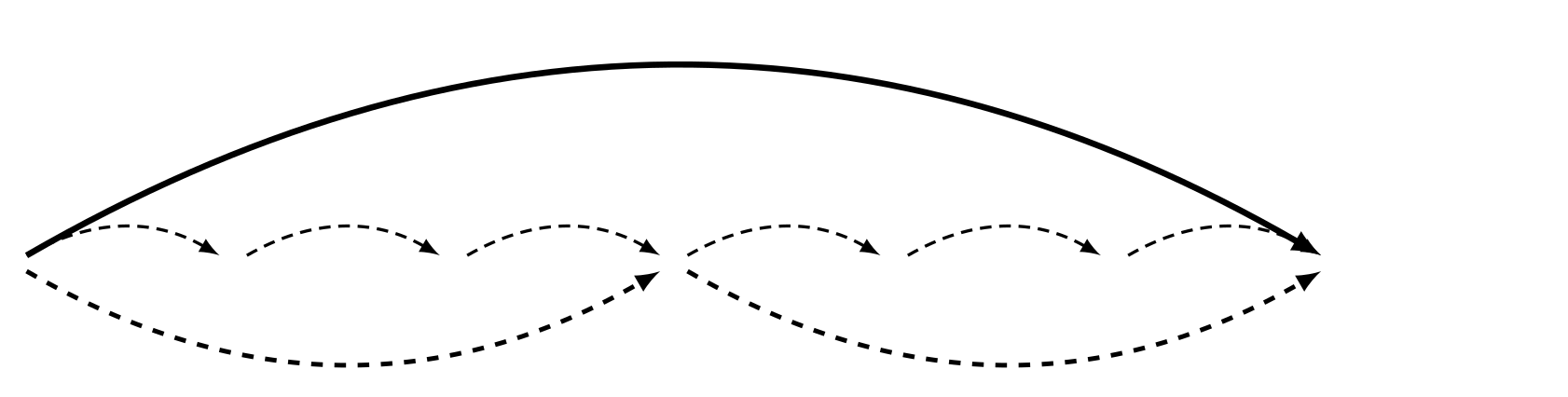
This viewpoint helps explain an experience that is quite common when reading. Even if individual sentences are clear and grammatically correct, a text can still feel difficult to follow. The issue is often not the sentences themselves, but how they are connected.
Flow, in this sense, is about how these arcs are linked together.
Connections can be made at several levels: between sections, between paragraphs, and between sentences. When these connections are clear, the text feels coherent and easy to follow. When they are not, the text can feel fragmented.
In the following reflections, I will discuss a few simple ideas that I have found helpful for creating flow at these different levels.
As before, these are not rules, but simply ways of thinking about writing that I have found useful in my own work.
 Johannes G. Borgqvist, PhD
Leave a comment